Understanding Website Trust Signals: A Data-Driven Framework for Growth Agencies
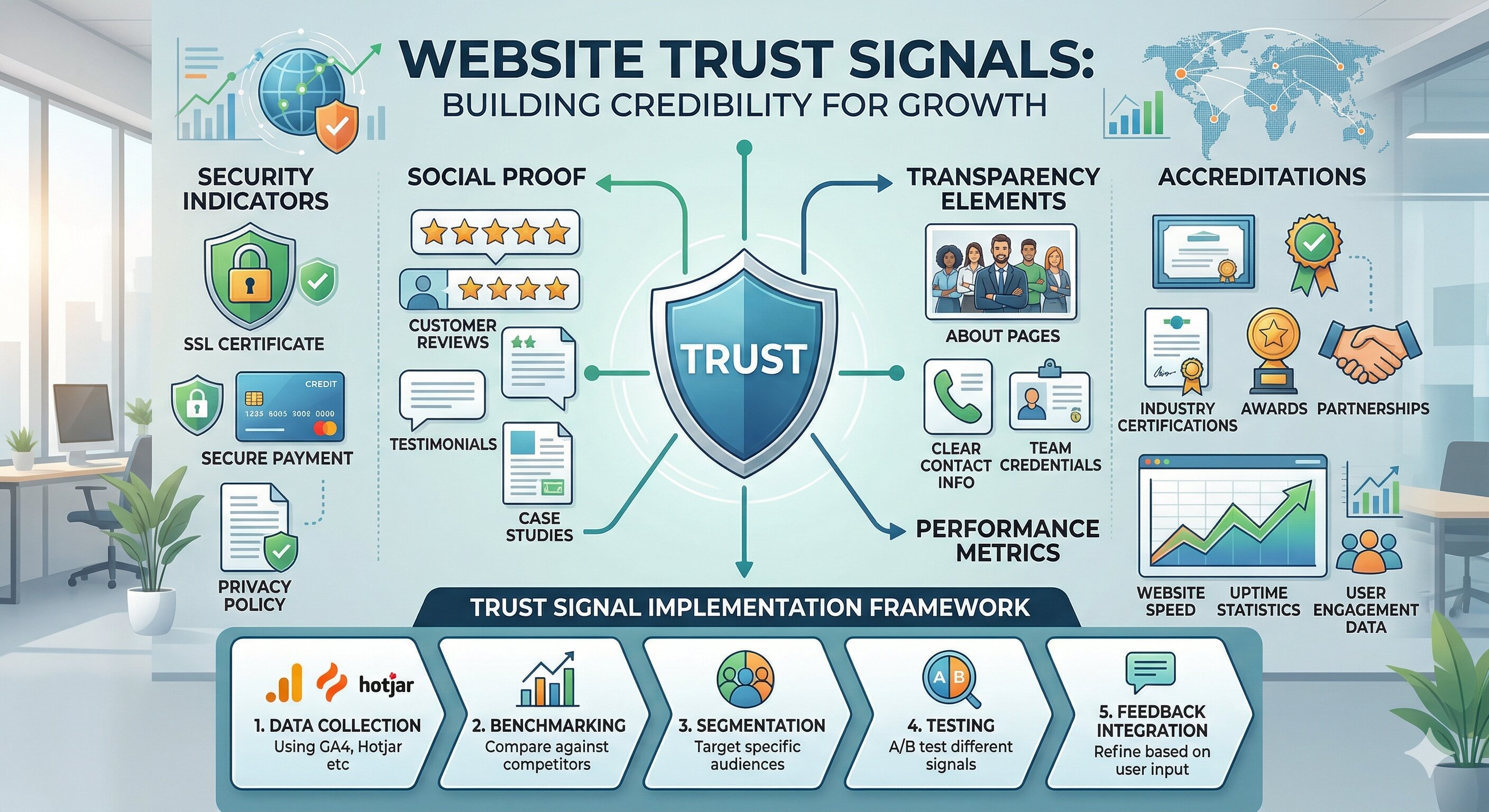
Dive into a practical, data-backed framework to analyze website trust signals that can accelerate your B2B growth. Learn key metrics, tools, and strategies tailored for agencies and service providers.
Introduction to Website Trust Signals
In the digital age, establishing trust is paramount for any business aiming for growth. Trust signals are indicators that can significantly influence user perceptions and decisions on a website. For growth agencies, understanding these signals is essential for crafting effective strategies that enhance credibility and engagement. In this article, we explore a comprehensive, data-backed framework to analyze and implement website trust signals effectively.
Identifying Key Trust Signals
Different types of trust signals can be leveraged to enhance credibility. Here’s a breakdown of the key categories:
- Security Indicators: SSL certificates, secure payment gateways, and privacy policies.
- Social Proof: Customer reviews, testimonials, and case studies.
- Transparency Elements: Clear contact information, about pages, and visible team credentials.
- Accreditations: Industry certifications, partnerships, and awards.
- Performance Metrics: Website speed, uptime statistics, and user engagement data.
Framework for Analyzing Trust Signals
To systematically analyze website trust signals, follow this actionable framework:
- Data Collection: Utilize tools like Google Analytics and Hotjar to gather user interaction data.
- Benchmarking: Compare your trust signals against competitors in your niche.
- Segmentation: Identify which signals resonate more with different audience segments.
- Testing: Implement A/B testing for various trust signals to determine their effectiveness.
- Feedback Integration: Regularly collect user feedback to refine and adapt trust signals continuously.
Comparison of Trust Signals
| Trust Signal Type | Impact on Conversion | Ease of Implementation |
|---|---|---|
| Security Indicators | High | Moderate |
| Social Proof | Very High | Easy |
| Transparency | Moderate | Moderate |
| Accreditations | High | Difficult |
| Performance Metrics | High | Moderate |
Case Studies: Successful Implementation
Understanding the theoretical aspects of trust signals is vital, but real-world applications provide the insights needed for actionable strategies. For example:
- Agency A: Enhanced their homepage with live chat options, resulting in a 25% increase in lead capture.
- Consultancy B: Added customer testimonials prominently on landing pages, leading to a 40% uptick in conversions.
- Local Business C: Improved their Google My Business profile with recent awards, achieving higher search visibility and engagement.
FAQs about Website Trust Signals
- What are trust signals?
- Trust signals are elements on a website that increase users' confidence in the site's credibility and security.
- How can I measure the effectiveness of trust signals?
- Use analytics tools to track user engagement and conversion rates before and after implementing trust signals.
- Which trust signals are the most effective?
- Security indicators and social proof typically yield the highest conversion impacts.
- Can trust signals affect SEO rankings?
- While they don't directly influence SEO, increased user engagement and lower bounce rates from trust signals can lead to improved rankings.