The Ultimate Tactical Checklist for Hyper-Personalized Cold Email Success
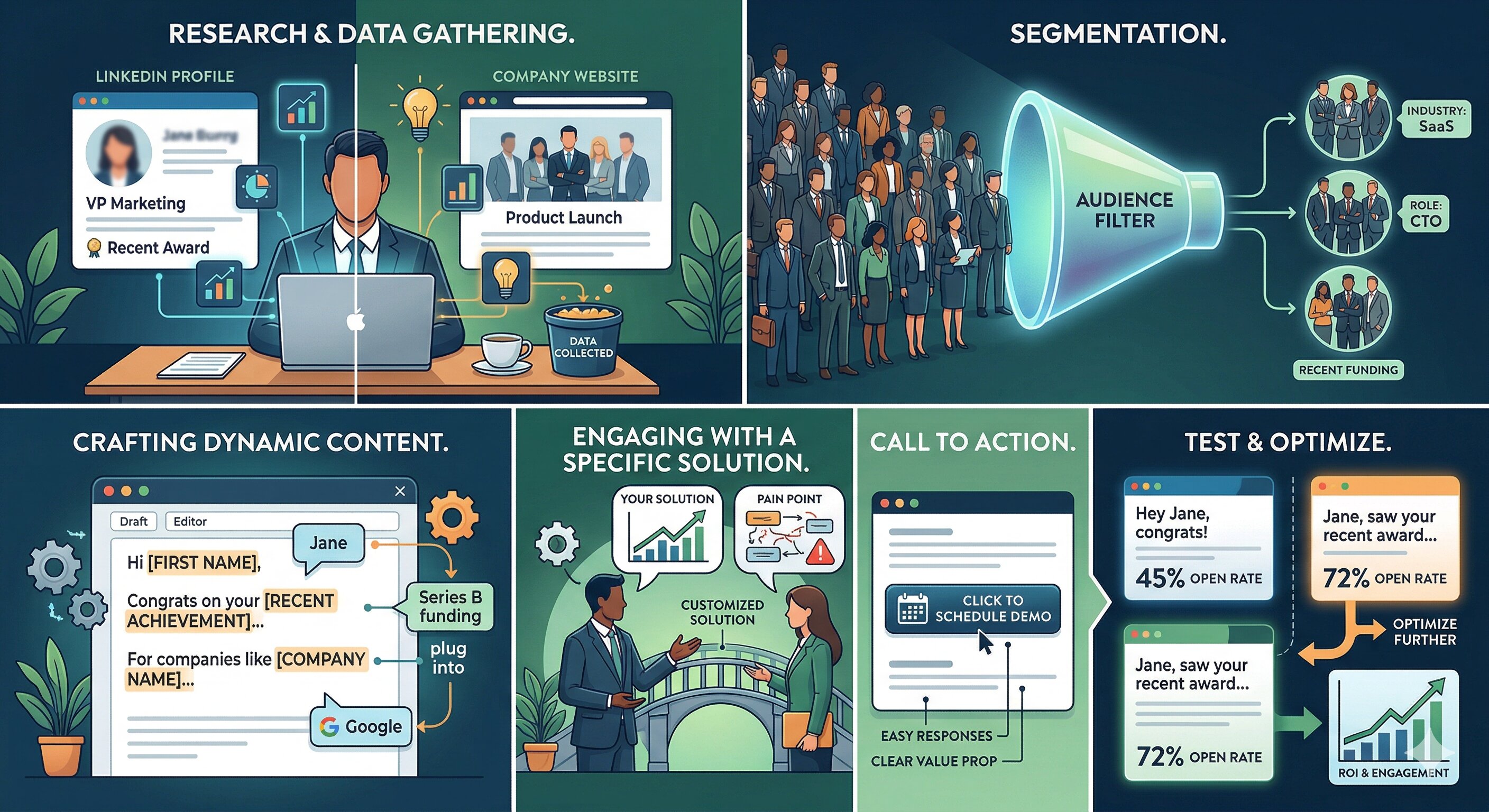
Unlock the potential of hyper-personalized cold emails with this comprehensive tactical checklist designed for growth agencies and B2B service providers. Learn actionable strategies to enhance engagement and response rates.
Understanding Hyper-Personalization
Hyper-personalization in cold emailing involves tailoring your messages based on specific data points about your target recipient. This goes beyond using a first name; it includes details such as company data, recent achievements, industry challenges, and personal interests.
Key Components of a Hyper-Personalized Cold Email
To create effective hyper-personalized emails, incorporate the following components:
- Research: Leverage tools like LinkedIn, company websites, and social media to gather insights.
- Segmentation: Divide your audience into smaller segments based on criteria such as industry, job title, and behavior.
- Dynamic Content: Use variables in your emails that change based on recipient data.
- Compelling Subject Lines: Create subject lines that pique interest and reflect personalization.
Tactical Checklist for Crafting Hyper-Personalized Cold Emails
1. Prepare Your Research
Before writing, compile relevant data about your recipient. Use this checklist:
- Identify the recipient's role and responsibilities.
- Gather insights on their recent company news or achievements.
- Understand their industry and market challenges.
- Locate mutual connections for a potential referral mention.
2. Segment Your Audience
Effective segmentation is crucial for targeting. Implement these steps:
- Use CRM data to segment contacts based on industry, role, and engagement history.
- Create personas that represent each segment’s pain points and goals.
- Prioritize segments based on potential ROI and engagement likelihood.
3. Craft the Email Body
The core of your email should resonate with the recipient. Follow this structure:
- Introduction: Briefly introduce yourself and establish credibility.
- Value Proposition: Clearly state how your service addresses a specific need.
- Call to Action: End with a clear, concise call to action, inviting them to respond or schedule a call.
4. Test and Optimize Your Emails
Regularly testing and optimizing your emails can enhance effectiveness:
- A/B test different subject lines and email body formats.
- Analyze open rates, click-through rates, and response rates.
- Solicit feedback from recipients to refine your approach.
Comparison of Personalization Techniques
| Technique | Description | Effectiveness |
|---|---|---|
| First Name Personalization | Using the recipient's first name in the email. | Moderate |
| Company Context | Referencing recent news or achievements of the recipient's company. | High |
| Shared Connections | Mentioning mutual contacts to build trust. | Very High |
| Customized Solutions | Offering solutions tailored to specific pain points. | Highest |
FAQ Section
What is hyper-personalization in cold emailing?
Hyper-personalization is the practice of using detailed recipient data to tailor email content, making it more relevant and engaging for the receiver.
How do I gather data for personalization?
You can gather data through platforms like LinkedIn, company websites, and industry news outlets to understand your recipient better.
What tools can assist in cold email personalization?
Tools such as HubSpot, Mailchimp, and any CRM system with a contact database can provide insights and streamline your email personalization efforts.
How can I measure the success of my personalized emails?
Success can be measured through open rates, click-through rates, and ultimately the conversion rates resulting from your cold email campaigns.