Optimizing AI-Assisted Lead Discovery and Qualification: Common Pitfalls and Pragmatic Solutions
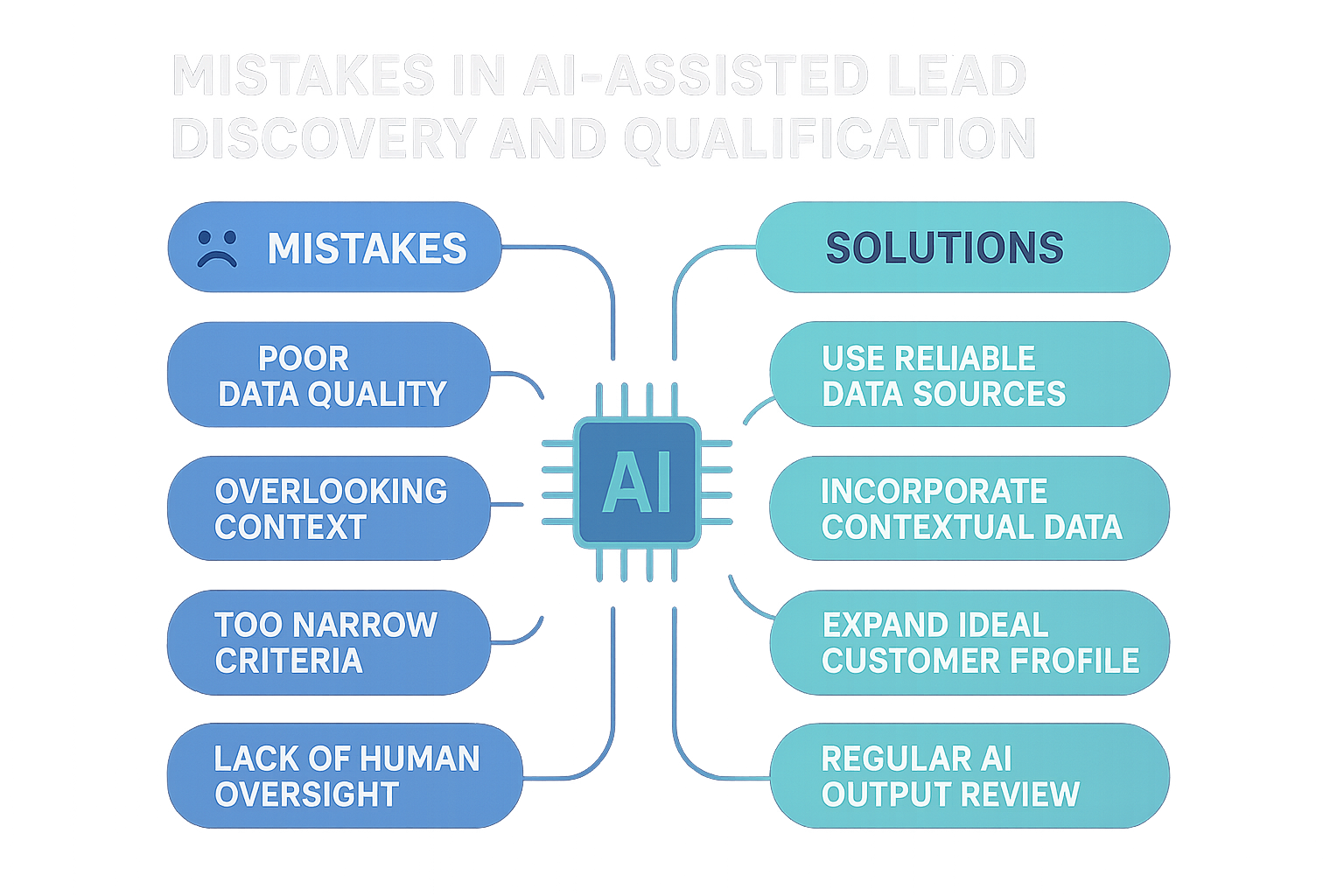
Explore the common mistakes in AI-assisted lead discovery and qualification, alongside practical solutions for B2B service providers and sales teams to enhance their processes.
Introduction to AI-Assisted Lead Discovery
In the dynamic landscape of B2B sales, leveraging AI for lead discovery and qualification can significantly improve efficiency. However, many agencies encounter common pitfalls that hinder their results. By understanding these mistakes and implementing strategic fixes, organizations can enhance their lead generation efforts.
Common Mistakes in AI-Assisted Lead Discovery
Mistake 1: Over-reliance on Historical Data
Many agencies fall into the trap of relying solely on historical data to train their AI systems. While past performance can offer insights, it may not account for evolving market trends.
Fix: Integrate Real-Time Data Analysis
Instead of exclusively focusing on historical data, incorporate real-time analytics. This approach allows you to adjust your lead criteria to reflect current market conditions. Tools like Google Trends and social media monitoring can help identify emerging leads.
Mistake 2: Neglecting the Human Touch
Some teams overly automate their lead qualification, which might lead to missed opportunities. AI can be efficient, but it cannot replace human intuition.
Fix: Balance Automation with Personalization
Implement a hybrid approach where AI handles initial lead identification and qualification, followed by human intervention for personalized outreach. This can ensure that qualified leads receive tailored communication that resonates with their needs.
Frameworks for Effective Lead Qualification
Framework 1: RACE (Reach, Act, Convert, Engage)
Utilize the RACE framework to define your lead qualification process:
- Reach: Identify potential leads using AI tools.
- Act: Analyze engagement levels and segment leads accordingly.
- Convert: Use AI scoring metrics to prioritize leads for sales outreach.
- Engage: Foster relationships with qualified leads through targeted content.
Framework 2: BANT (Budget, Authority, Need, Timing)
This classic qualification framework helps structure your scoring criteria:
- Budget: Does the lead have allocated funds for your service?
- Authority: Is the lead the decision-maker?
- Need: Does your offering solve a specific problem for the lead?
- Timing: Is there an urgency for the lead to make a decision?
Comparative Analysis of Lead Qualification Techniques
| Technique | Pros | Cons |
|---|---|---|
| AI-Driven | Faster data processing | Risk of misjudgment |
| Human-Centric | Personalized approach | Time-consuming |
| Hybrid Model | Best of both worlds | Requires careful implementation |
Conclusion: Implementing Solutions for a Robust Process
The journey to optimize AI-assisted lead discovery is multi-faceted. By identifying and rectifying the common mistakes discussed, agencies can create a more effective lead generation strategy. Balance technology with human insight, continuously refine your frameworks, and leverage real-time data analysis to ensure your qualification process remains relevant and efficient.
FAQ Section
What are the most common mistakes in AI-assisted lead discovery?
Over-reliance on historical data, neglecting the human touch, and failing to update lead criteria are frequent errors.
How can real-time data improve lead qualification?
Real-time data helps organizations adapt to current market dynamics, ensuring more accurate lead targeting.
What frameworks can I use for lead qualification?
Two effective frameworks are RACE and BANT, which help structure the qualification process and ensure alignment with lead needs.
Is a hybrid model better than fully automated systems?
Yes, a hybrid model combines speed and efficiency of AI with the personalized touch of human interaction, leading to better results.